
Will I Be Okay? Moving from Chaos to Clarity in Post-divorce Finances
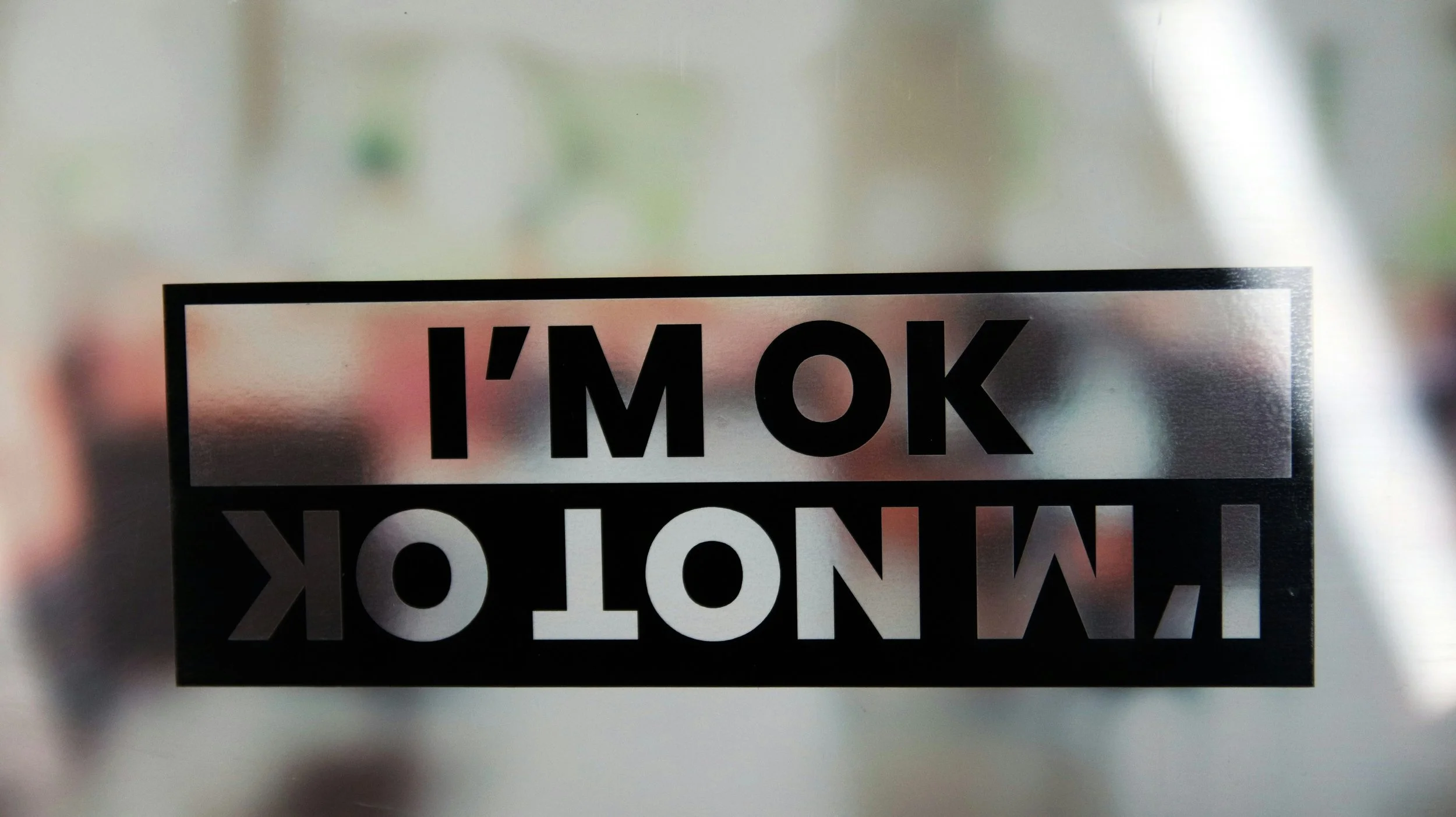
Regardless of how a client came to the difficult process of divorce, I find they all have the same underlying dread around the uncertainty of money when one household suddenly becomes two.
“Am I going to be okay?”
That question may haunt you in the middle of the night. Or while reviewing documents you never wanted to understand. Or sitting across from your attorney or financial advisor, hoping to find certainty.
You might think that the answer to your question lies in a magic number to seek in settlement. But what you are really asking is not about a number.
The questions beneath the question of “Will I be okay?” go deeper and are harder to quantify:
Will my life still work?
Will I have choices?
Will I feel secure again?
The Problem With the Question
The challenge is that “Will I be okay?” sounds like a yes-or-no question. It isn’t.
Financial security is not a single threshold you either meet or miss. It’s a range of possibilities shaped by decisions, timing, and tradeoffs.
Two people with the same balance in their accounts can have very different outcomes— because they make different choices about spending, investing, work, and lifestyle.
So the goal is not to get a simple answer. We aren’t really looking for a yes or a no.
The goal is to build clarity.
How We Start to Answer the Question
Much of financial planning can be viewed like a journey. We want to understand where you are, where you want to go, and the path to get you there.
Because the path to “okay” becomes much clearer when you understand where you are and have a map to arrive at your destination.
Here’s what we consider with you as we start to build that map:
1. Your Assets—What You Have
Not just how much—but what kind.
Investment accounts vs. retirement accounts
Taxable vs. tax-deferred
Liquid vs. illiquid assets
Because a dollar is not always just a dollar. Will it be taxed? Is there a time limit on when you can withdraw? What other stipulations are there?
What matters is how and when you can use it.
2. Your Spending—What Your Life Requires
This is where the analysis becomes personal. I will never tell you that you spend too much on lattes. I will, however, push you to consider whether your spending aligns with your values. What is really important?
This is an honest understanding of:
What it costs to support your current life
What may change over time
What actually matters to you
Even if looking at your spending head on feels like sheer torture, I promise that this is where you will begin to feel empowered. Because knowing what is really making up the ins and outs of this thing called cash flow shows us where we can take action. This is often the first moment where clients feel a shift—from fear of the unknown to something more grounded.
3. Your Timeline—How Long It Needs to Last
Your financial plan is not static. In fact, I don’t even like to use “financial plan” as a noun, because more realistically, “financial planning” is a verb. It’s something we do and CONTINUE to do over time.
But if we’re thinking of a plan as a noun, or even a path to guide you on your journey, it needs to support:
Your current stage of life
Your future retirement
Longevity (aka “old age” — often longer than expected)
A 55-year-old woman today may need her assets to last 35–40 years.
That changes the equation. We can’t only consider how to get through this year or even the next few years. This is your life, and we are planning for all of it.
4. Your Strategy—How It All Works Together
This is where planning replaces guessing.
We begin to model:
Different spending levels
Different market conditions
Different life choices
Not to predict the future—but to understand the range of outcomes and how different choices can impact the likelihood of reaching your desired destination.
And most importantly:
To identify what is within your control.
What Clients Are Often Surprised to Learn
Once we’ve gone through the strategy and tested different scenarios, clients generally fall into one of two camps:
“I’m in better shape than I thought.” OR…
“I need to make some adjustments.”
And sometimes a little bit of each of those.
Either way, getting to that response is valuable because we have shifted from the chaos of uncertainty to the calm of clarity. And clarity allows for better decisions.
What “Being OK” Actually Means
It rarely means perfection. Or a villa in the south of France.
It doesn’t mean eliminating all risk, which, by the way, is not possible.
“Being OK” is actually:
Understanding your financial reality
Knowing your options
Making intentional choices
Adjusting over time as life evolves
In other words, it means having a plan. And acting on it. Knowing what you value, understanding what you need to do to get there, and taking aligned action to keep you on the path.
A Different Kind of Confidence
Confidence, in this context, doesn’t come from a single number in an investment account.
It comes from knowing:
“I understand how this works.”
“I know what to do next.”
“I am not guessing anymore.”
And perhaps most importantly, knowing that if you get thrown off the path (because life does tend to do that to us), you have a strategy for finding your way to get back on track, AND a trusted partner in your advisor to help you along the way.
Where to Begin
If you are asking “Will I be okay?”, you are already at the right starting point.
Because the question itself is what leads to clarity.
From there, the process becomes:
Understand → Organize → Plan → Adjust. Rinse. Repeat.
You don’t have to solve everything at once.
You just have to begin.
If you’re in the middle of sorting through these questions, you don’t have to do it alone. Let’s start with a simple conversation to get you moving toward clarity.
